- Skip to main content
 A product byInno
AI + human / grievance mechanism planning
Practical knowledge for designing grievance mechanisms.
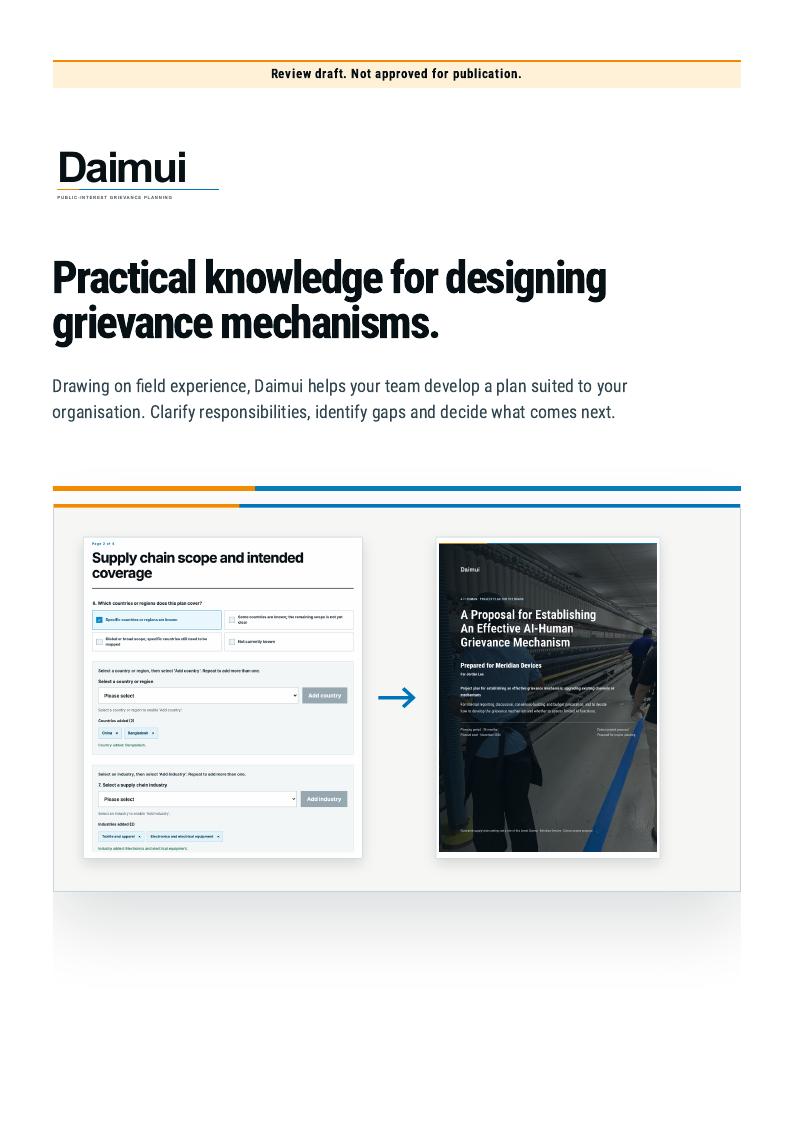
Drawing on field experience, Daimui helps your team develop a plan suited to your organisation. Clarify responsibilities, identify gaps and decide what comes next.
Start planning with Daimui Planning tool · not a reporting channelPRODUCT VIEW 01 From planning context to structured proposal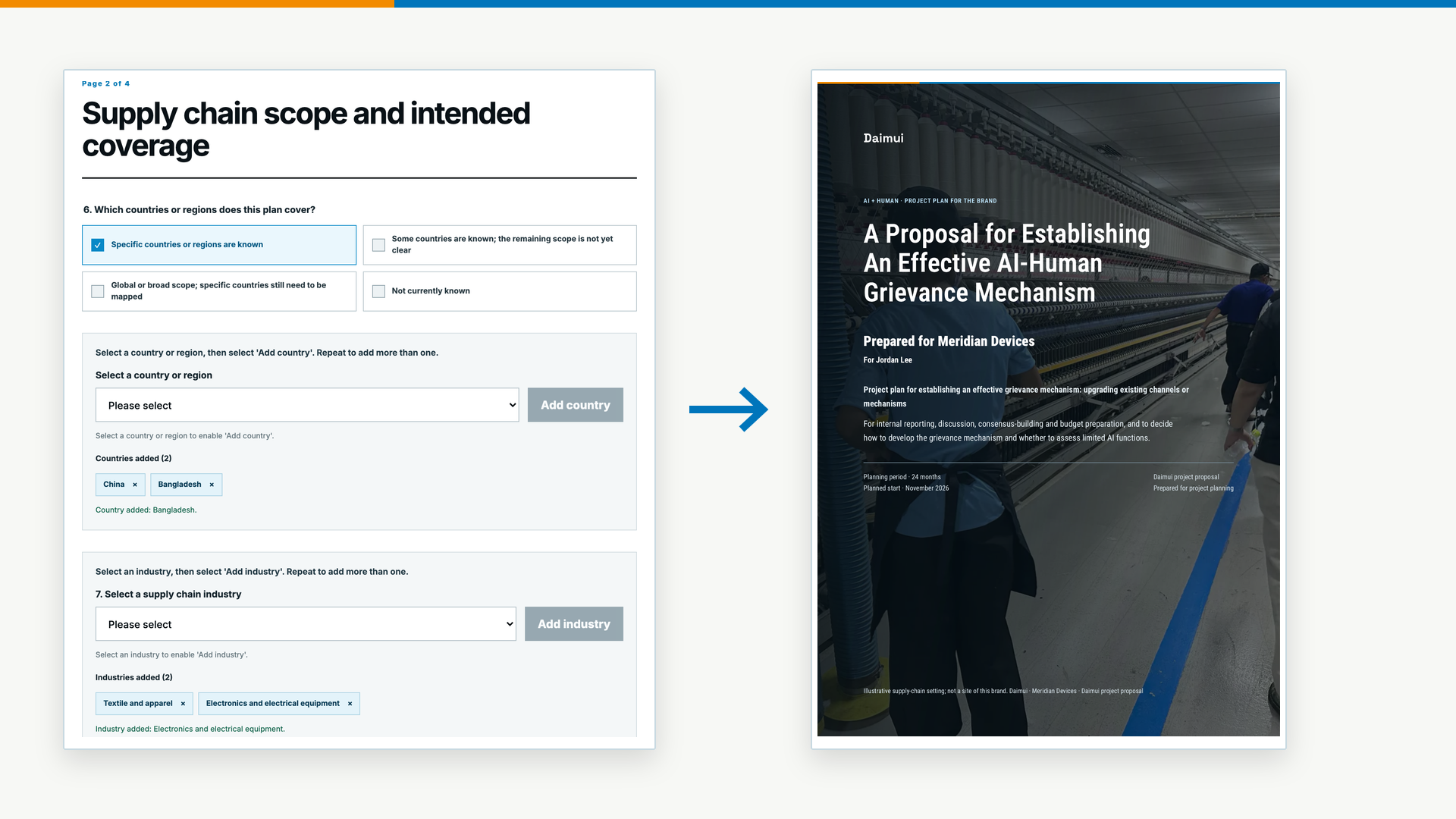
Product handbook v0.4 · illustrative planning flow · no live grievance data 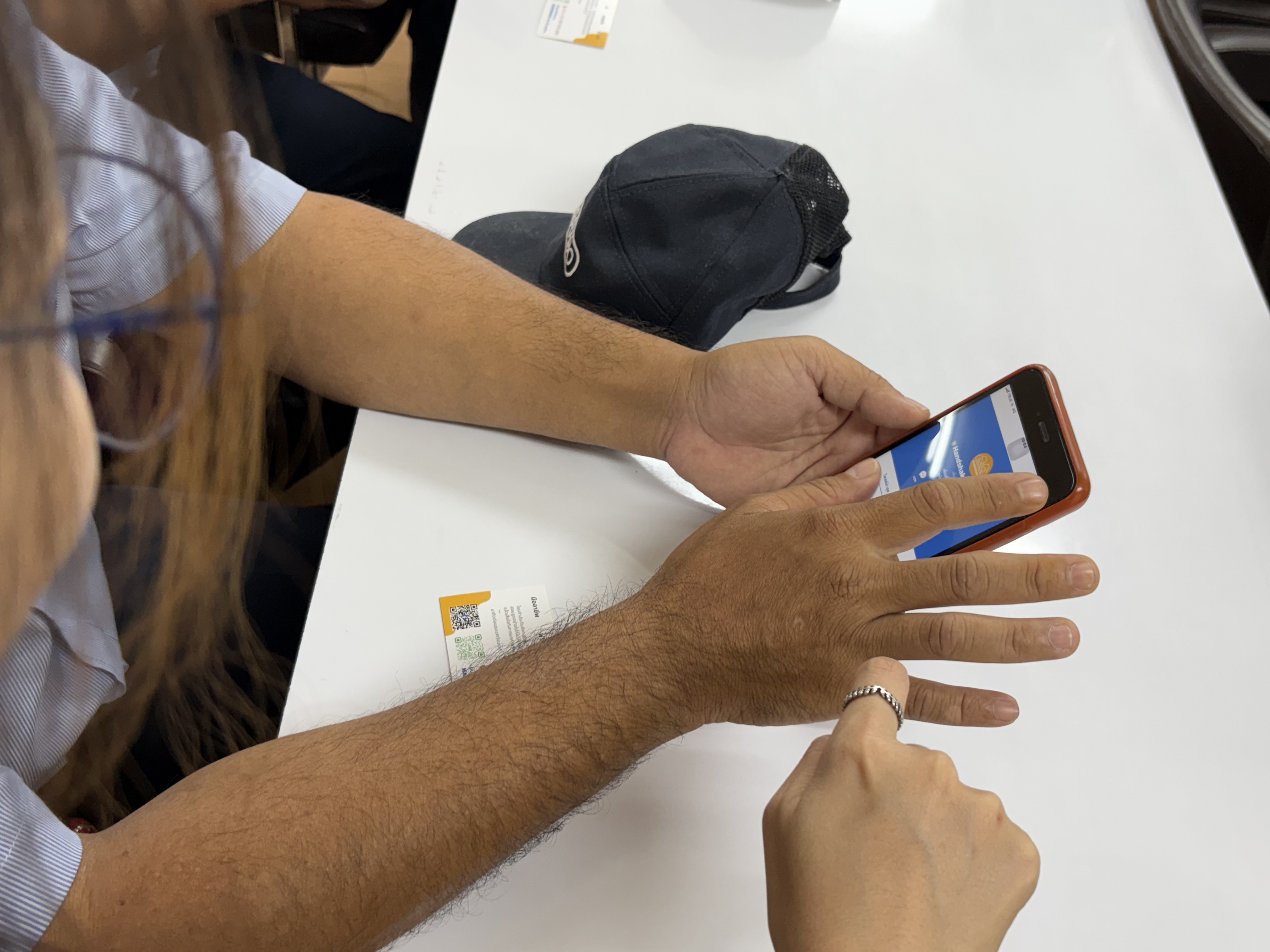
FIELD SOURCEHuman-run practice What the product helps organise
A planning route from context to proposal
- 01Project context
- 02Knowledge comparison
- 03Planning decisions
- 04Structured proposal
How Daimui works
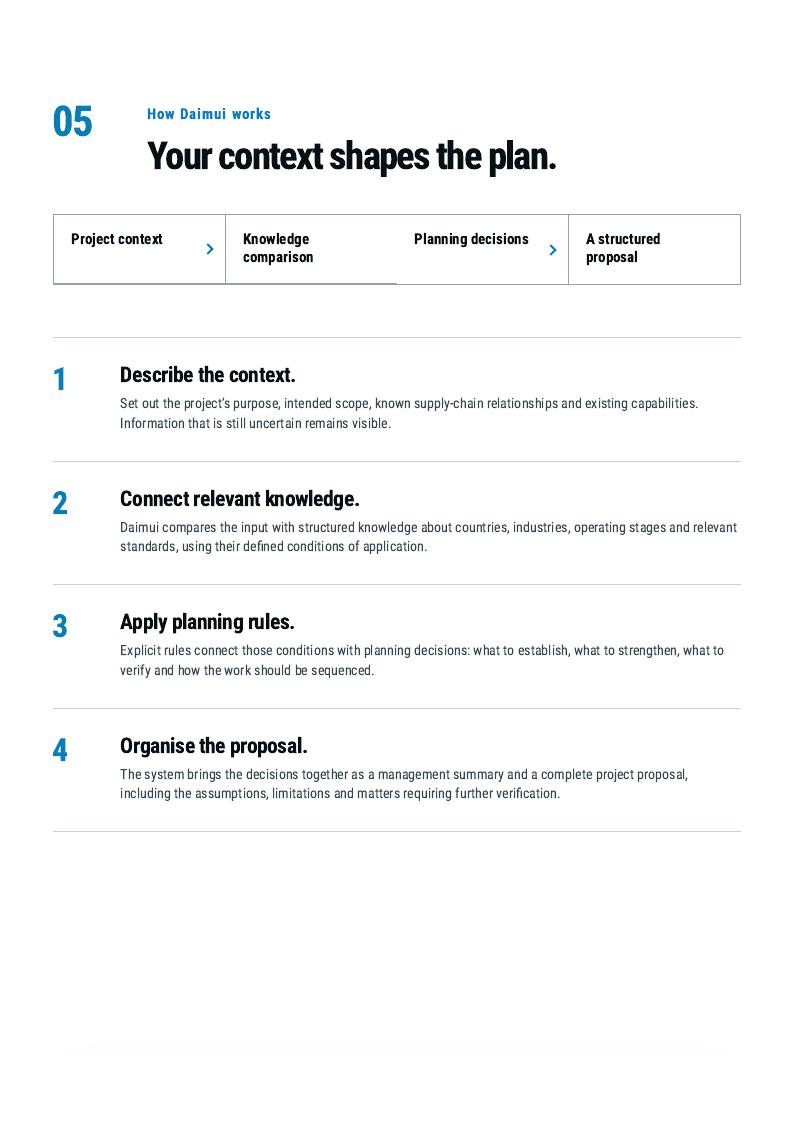
Your context shapes the plan.
Daimui turns project context into an organised proposal for grievance-mechanism planning. It connects relevant knowledge with explicit planning rules, while uncertainty and matters requiring verification remain visible.
PRODUCT VIEW 02Planning context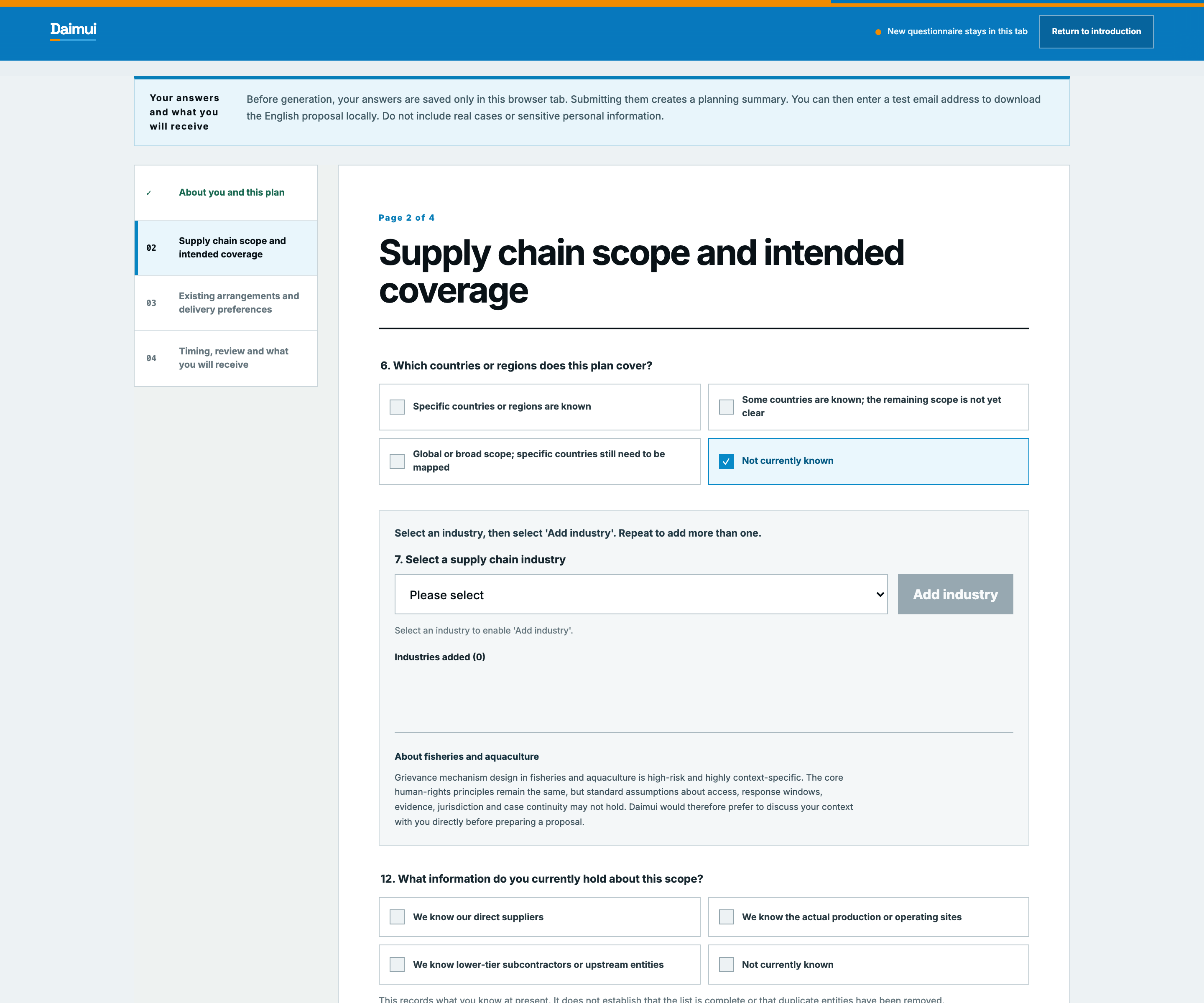
Real product interface · project inputs shape the proposed sequence and verification work From input to proposal
-
01 / Input
Describe the context.
Set out the project’s purpose, intended scope, known supply-chain relationships and existing capabilities. Information that is still uncertain remains visible.
-
02 / Compare
Connect relevant knowledge.
Daimui compares the input with structured knowledge about countries, industries, operating stages and relevant standards, using their defined conditions of application.
-
03 / Decide
Apply planning rules.
Explicit rules connect those conditions with planning decisions: what to establish, what to strengthen, what to verify and how the work should be sequenced.
-
04 / Output
Organise the proposal.
The system brings the decisions together as a management summary and a complete project proposal, including assumptions, limitations and matters requiring further verification.
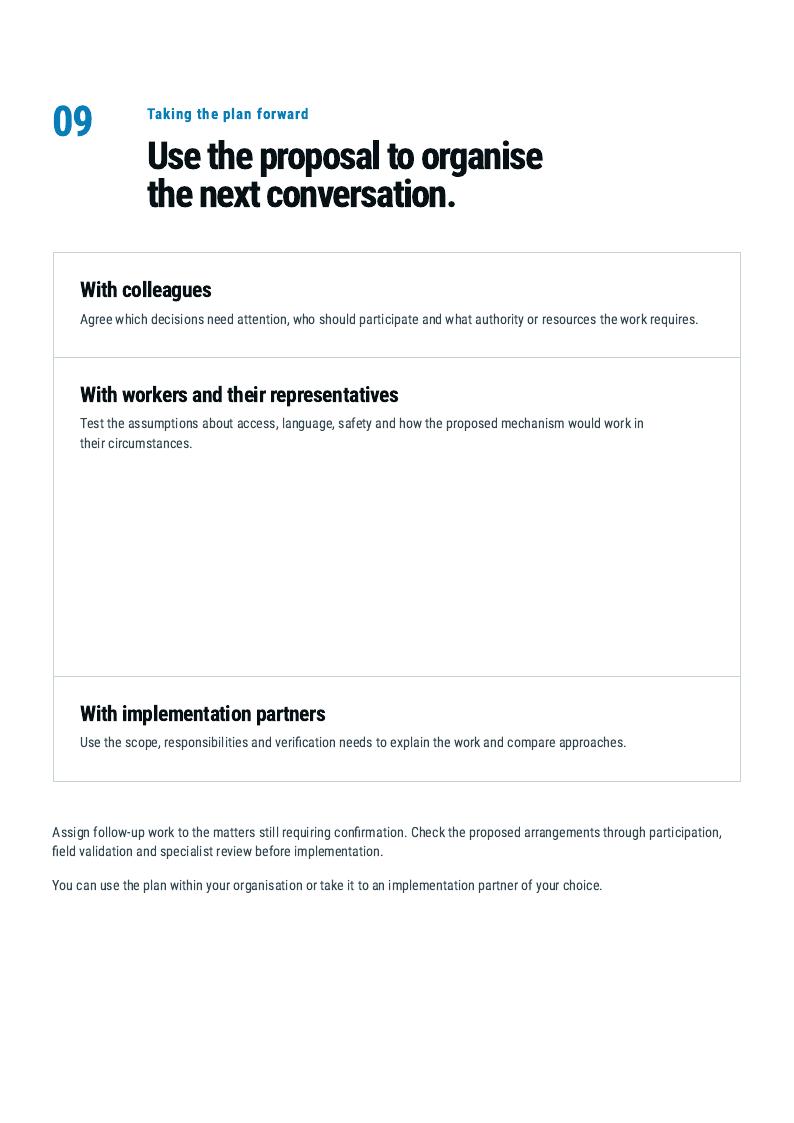
Product preparation Questions, knowledge, conditions and planning rulesDaimui organises specialist preparation into work that can be discussed and sequenced.
Planning signals Inputs are not evidence of readinessThey shape the proposed sequence and verification work.
Still requires verification Access, language, privacy and human handoffInvestigation, review and remedy authority remain matters for appropriate people and processes.
FIELD SOURCEExisting public Inno asset Method source within the product
Field experience informs the planning method.
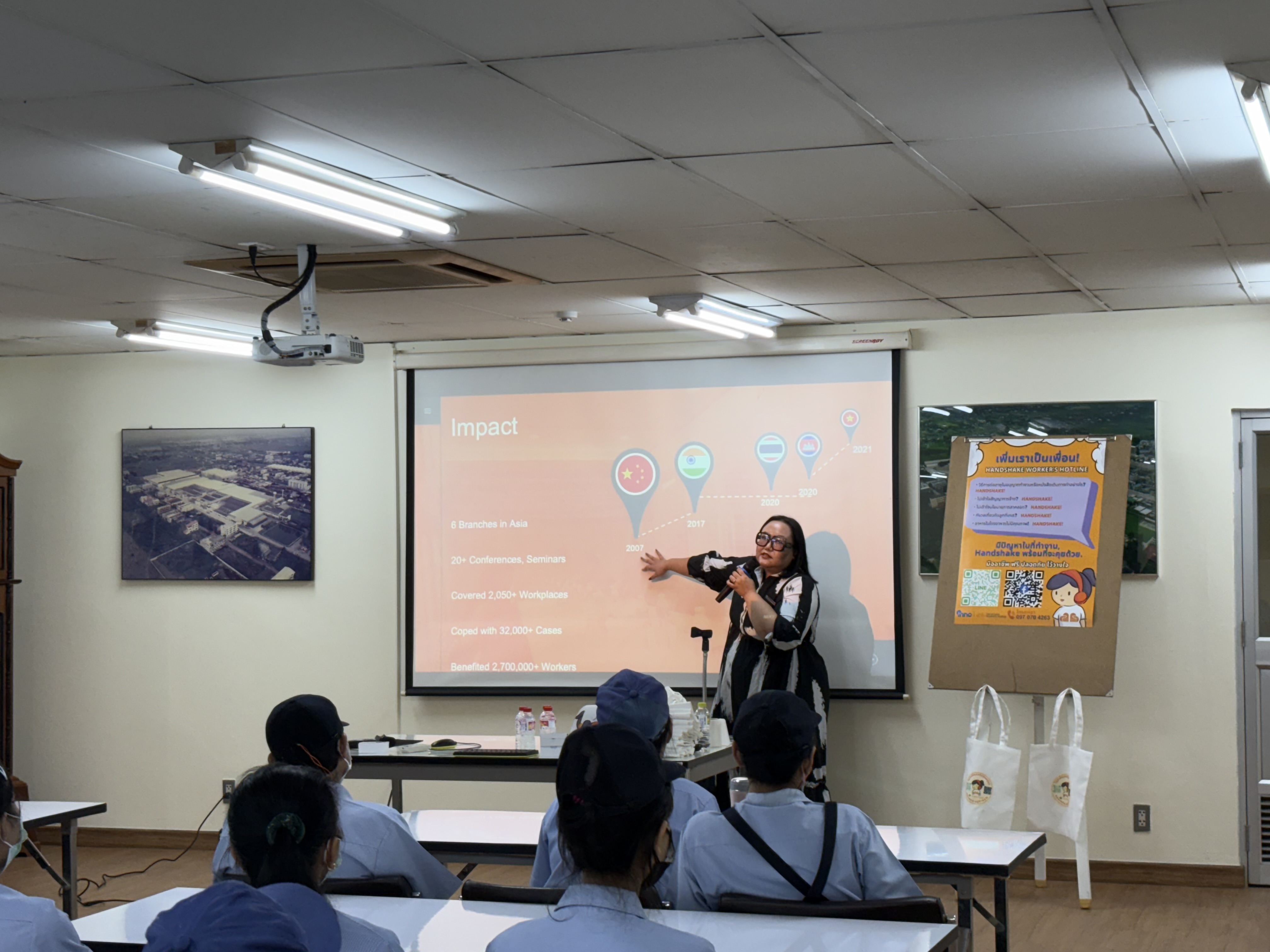
Daimui draws on Inno and Handshake Worker’s Hotline practice since 2007. That experience informs the questions, knowledge and judgement used in mechanism planning.
Daimui supports mechanism planning. Live grievances belong in authorised reporting channels.Mechanism scope
What the plan covers.
A mechanism needs a connected path through which people can raise concerns, receive a response and seek remedy. Planning considers six areas and the responsibilities that connect them.
Responsibility across the whole path Daimui supports planning. Authorised people remain responsible for live grievances, investigation, decisions and remedy.- 01Intake
How can people raise concerns safely?
- 02Identification
How will the concern be understood?
- 03Triage
Who takes ownership, and when is referral or escalation needed?
- 04Follow-up
Who maintains contact and tracks the delivery of remedy?
- 05Reporting
What should the person raising the concern be told?
- 06Closure
What evidence supports closure?
Open product handbookDAIMUI PRODUCT HANDBOOK
Read the full product handbook.
- 01Product overview
- 02Planning method
- 03Responsibility boundaries